You hear the word “laser” at a dental visit and your mind can go in a few directions at once. Is this more serious than you thought? Will it hurt less, or cost more? Is it a newer option your dentist prefers, or the better choice for what is happening in your mouth right now? That uncertainty is common, especially when you were expecting a routine cleaning or a simple fix and suddenly the plan sounds different. For more information, visit dentistsofhinsdalelake.com.
A laser is not a replacement for every drill, scaler, or surgical tool. It is one option your dentist may use for specific problems involving gum tissue, tooth preparation, bacteria control, or small soft tissue procedures. In many cases, laser dentistry is suggested because it can be more precise, reduce bleeding, and make recovery easier. In other cases, traditional dental tools still do the job better. The right answer depends on the condition being treated, the type of laser available, and your dentist’s training.
Laser dental treatment is often chosen for precision and comfort
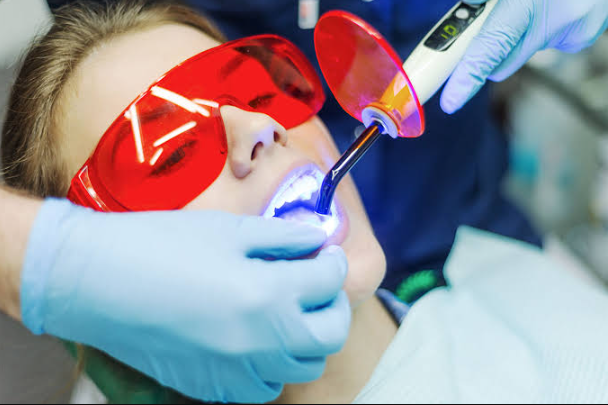
Dentists use lasers on both hard tissue and soft tissue, though not every laser does both. According to the FDA’s information on medical lasers, these devices are used in many medical and dental settings to cut or remove tissue with focused light energy. In a dental office, that can matter when a small area needs careful treatment and your dentist wants to avoid affecting nearby tissue.
Soft tissue lasers are often used for reshaping gums, treating inflamed tissue, exposing a tooth that has not fully erupted, or removing a small fold of tissue. If your gums bleed easily or you are dealing with tenderness around one area, a laser may seal blood vessels as it works, which can mean less bleeding during the visit. That alone can make treatment feel less stressful.
Lasers may also come up during gum disease care. If bacteria and infected tissue are collecting below the gumline, your dentist may suggest a laser as part of treatment for periodontal pockets. Gum disease has a way of sneaking up on people. Your gums may bleed when you brush, your breath stays off no matter what you do, and then you hear words like “bone loss” or “deep cleaning.” The National Institute of Dental and Craniofacial Research explains the progression and risks of gum disease, which is why early, targeted care matters.
Some dentists also use lasers for small cavity work, reducing tooth sensitivity, or helping manage bacteria inside a prepared area. That does not mean a laser can handle every cavity or every crown preparation. If decay is large, deep, or located in a place where traditional instruments give better access, the old tools still make more sense.
See also: Understanding the Role of Financial Protection in Everyday Life
Traditional dental tools still have a clear place in everyday care
People sometimes assume a laser is automatically better because it sounds newer. That is not how good dentistry works. A handpiece, scaler, or surgical instrument may still be the faster, cleaner, and more predictable option. If a filling needs a certain shape, if tartar is heavy and widespread, or if a tooth needs work that a laser cannot do efficiently, your dentist may stay with traditional methods.
This is where confusion often sets in. You may be hoping the laser means no numbing, no noise, and no recovery. Sometimes that happens. Sometimes it does not. A laser can reduce the need for anesthesia in select cases, but not all. It can lower discomfort for some procedures, but your experience still depends on the location, the extent of the problem, and your own sensitivity.
Dental laser procedures are best seen as a tool with strengths and limits, not a promise of an easier appointment every time. A careful dentist matches the method to the problem instead of forcing one method onto every patient.
Laser dentistry and traditional tools differ in a few practical ways
| Factor | Laser Use | Traditional Dental Tools |
| Best for | Soft tissue reshaping, some gum disease care, small precise areas, selected cavity treatment | Routine fillings, heavy tartar removal, broad tooth preparation, many common procedures |
| Bleeding during soft tissue work | Often reduced because the laser can seal blood vessels | May be greater depending on the procedure |
| Need for anesthesia | Sometimes less, but not guaranteed | Often needed for drilling or surgical work |
| Noise and vibration | Usually less noticeable | Often more noticeable, especially with a drill |
| Recovery after soft tissue treatment | May be smoother with less swelling | Can be longer depending on technique and tissue involvement |
| Availability | Depends on office equipment and training | Widely available |
Cost can vary too. Some offices charge more for laser based treatment, especially if it involves specialized periodontal or cosmetic work. Insurance coverage may not change just because a laser is used. What usually matters is the procedure code and whether the treatment itself is covered. If budget is already weighing on you, ask for the total fee and whether there is a non laser option with a similar outcome.
Your next step is a clearer conversation, not a blind yes or no
Ask what problem the laser is solving. This question cuts through marketing fast. Are you dealing with inflamed gum tissue, a small cavity, bacterial control, or a cosmetic gum issue? If your dentist can explain the exact reason in plain language, the recommendation becomes easier to trust.
Ask what changes if traditional tools are used instead. You want a real comparison, not a vague preference. Will there be more bleeding, more anesthesia, more time in the chair, or no meaningful difference at all? This is often where the value of dentist laser treatment becomes clear.
Ask about recovery, cost, and training. Find out how long healing usually takes, whether you will need numbing, and what the final fee will be. It is also fair to ask how often the dentist performs that specific laser procedure. Comfort with the tool matters as much as the tool itself.
The best dental tool is the one that fits your condition
If your dentist suggests a laser instead of traditional dental tools, it usually means they see a chance to treat a specific area with more precision or less tissue trauma. That can be a real benefit, especially for gum treatment and small soft tissue procedures. It does not mean every laser option is necessary, and it does not mean older methods are outdated.
You do not need to guess your way through the decision. Ask why this method fits your case, what the alternatives are, and what you should expect after treatment. A good dentist will answer directly and help you feel steady before anything starts.