A freshly replastered swimming pool can completely transform an aging backyard. The surface looks smoother, the water appears brighter, and the entire pool can feel new again. However, completing pool replastering is only the beginning. How the new surface is maintained during its first few weeks—and throughout the years that follow—can make a major difference in its appearance and durability.
Pool plaster is a cement-based material that continues developing after installation. According to the National Plasterers Council (NPC), approximately 70% of cement hydration occurs during the first seven days, while about 85% takes place within the first 28 days. This makes the first month especially important.
Here are practical maintenance tips that can help protect your investment and keep your replastered pool looking its best.
Follow the Recommended Pool Replastering Start-Up Process
One of the biggest mistakes homeowners can make is treating a newly replastered pool exactly like an established pool.
Fresh plaster needs a proper start-up procedure. The NPC specifically recommends performing a start-up process on newly plastered pools because proper start-up can promote a longer-lasting interior finish.
Your pool contractor should provide specific instructions based on the plaster material, fill water, equipment, and sanitation system.
During this period, avoid making aggressive chemical adjustments without testing the water first. Adding excessive acid or other chemicals can expose the new surface to unnecessarily harsh conditions.
Brush the New Plaster Regularly
Brushing is particularly important after pool replastering because new cementitious surfaces may release fine plaster dust as they cure.
Use the brush recommended by your installer and work across the walls, steps, benches, corners, and floor. Regular brushing helps prevent loose material and deposits from remaining on the surface.
The first several days deserve extra attention. If you notice unusual discoloration, excessive plaster dust, rough areas, or persistent deposits, contact the plaster contractor instead of attempting an aggressive cleaning treatment yourself.
Keep Pool Water Chemistry Balanced
Long-term pool replastering maintenance depends heavily on water chemistry. Water that becomes excessively acidic can be aggressive toward cement-based finishes, while improperly balanced water may also encourage scale deposits and discoloration.
The NPC identifies chlorine, alkalinity, pH, calcium hardness, cyanuric acid, and total dissolved solids as important chemistry factors for maintaining plastered surfaces. It also recommends monitoring the Langelier Saturation Index, or LSI.
For general swimming pool operation, the CDC recommends maintaining pH between 7.0 and 7.8. Typical chlorine levels are approximately 1–4 parts per million, although the correct disinfectant level can depend on the pool system and stabilizer being used.
Rather than focusing on only one measurement, look at the water chemistry as a complete system.
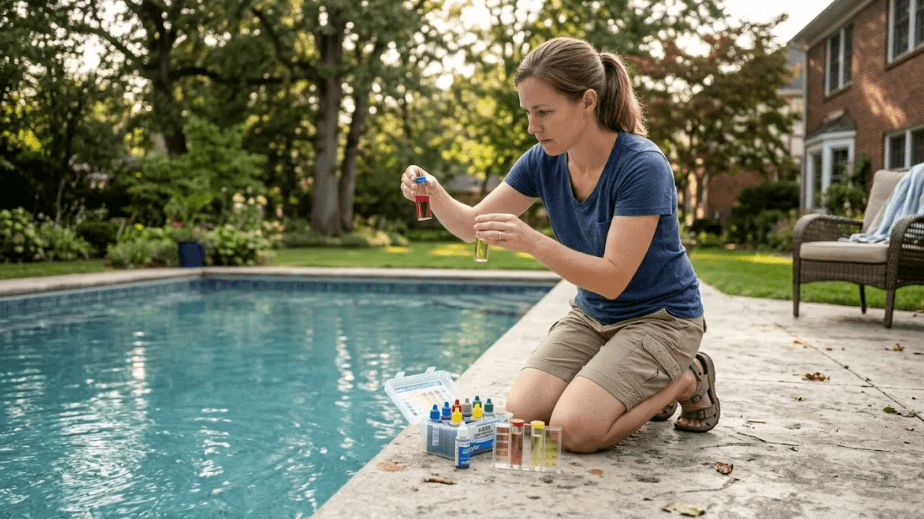
Test the Water Consistently
Water can look perfectly clear while its chemistry is slowly moving outside desirable ranges.
During the first weeks following pool replastering, testing should be especially consistent. Once the pool becomes established, continue checking the water regularly and after events that may significantly change its chemistry, such as:
- Heavy rain
- Large pool parties
- Extended periods of intense sunlight
- Chemical treatments
- Adding substantial amounts of fresh water
Keeping a maintenance log can also help you identify recurring changes before they become surface problems.
Do Not Rush Salt or Heavy Cleaning Equipment
If you have a saltwater swimming pool, don’t automatically restart the salt chlorine generator immediately after replastering.
Some professional start-up procedures recommend waiting approximately 28–30 days before adding salt to newly plastered pools. Certain protocols also avoid wheeled automatic vacuum cleaners during this early curing period.
Recommendations vary by plaster product and start-up method, so your plasterer’s instructions should take priority.
Waiting can feel inconvenient, but giving the new finish sufficient time to develop is a small trade-off compared with risking marks or surface deterioration.
Prevent Leaves and Metal Stains
Organic debris may seem harmless, but leaves, berries, seeds, and other material should not be allowed to sit on fresh pool plaster.
Remove debris with a skimmer and maintain proper circulation. Pay particular attention after storms when large amounts of vegetation can enter the pool.
Metals in the water can also contribute to staining. If your home uses well water or you have experienced metal staining previously, tell your pool professional before filling or chemically treating the newly replastered pool.
Maintain Proper Circulation and Filtration
Good circulation helps distribute chemicals evenly and prevents areas of stagnant water from developing.
Clean baskets, maintain the filter according to the manufacturer’s instructions, and watch for changes in water flow. The CDC also emphasizes maintaining filtration and recirculation systems as part of proper pool operation.
Don’t overlook equipment problems simply because the pool water still looks clear. A struggling pump or dirty filter can eventually make maintaining stable water chemistry more difficult.
Watch for Early Signs of Surface Problems
Regularly inspect the pool finish instead of waiting until discoloration becomes severe.
Look for unusual staining, rough patches, scaling, significant color changes, or deterioration. Some minor color variation can naturally occur in cementitious pool finishes, particularly colored plaster, but noticeable changes should still be evaluated. The NPC notes that surface color and shade can naturally vary and change over time.
Taking photos every few months can make gradual changes easier to recognize.
Protect Your Pool Replastering Investment
Quality pool replastering can give an older swimming pool an entirely new appearance, but the lifespan of that finish depends on what happens after installation.
Focus on proper start-up procedures, regular brushing, balanced water chemistry, reliable circulation, debris removal, and routine inspections. Most importantly, avoid aggressive chemical corrections without understanding why the water is out of balance.
A little extra attention during the first 28 days—and consistent maintenance afterward—can help your pool surface remain smoother, cleaner, and more attractive for years to come.