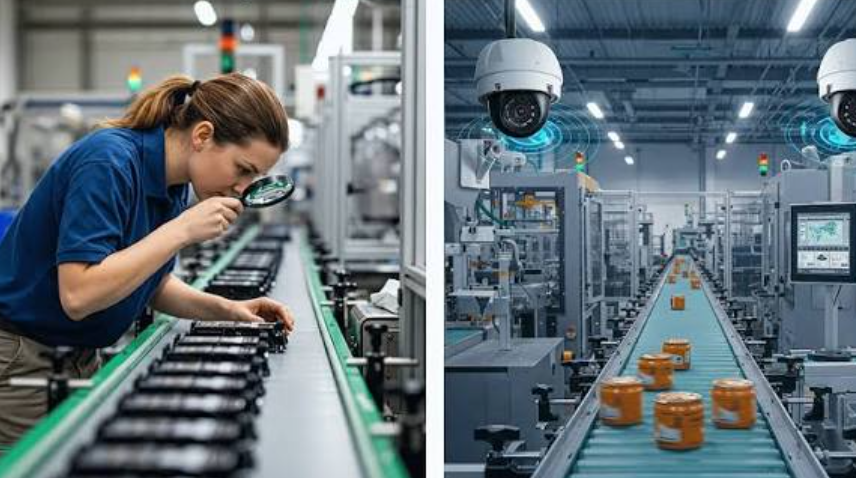
Efficient production depends on more than keeping machines running at high speed. Manufacturers also need to maintain consistent quality throughout the manufacturing process. In the printing industry, this can be particularly challenging because defects may appear unexpectedly while large quantities of material are being produced.
Traditional inspection methods can provide useful quality checks, but periodic sampling may not reveal every problem. When a defect appears between inspection points, production may continue before anyone becomes aware of the issue.
Automated quality control offers a way to improve production visibility. By using cameras, image-processing technology, and specialized software, manufacturers can monitor printed materials while production continues.
The Connection Between Quality and Efficiency
Quality control and production efficiency are closely connected.
A defective product discovered early can often be addressed more quickly than one discovered after an entire production batch has been completed. Late discovery may lead to additional sorting, rework, material waste, or production delays.
For this reason, effective quality control should support production rather than simply inspect finished products.
Automated monitoring can provide information during manufacturing, allowing operators to respond to potential issues closer to the point where they occur.
Challenges of Modern Printing Production
Printing machines can operate at high speeds and produce large quantities of material within relatively short periods.
Under these conditions, continuous manual observation can be difficult. Operators need to manage machinery, materials, settings, and other production responsibilities while also maintaining quality awareness.
A defect such as a streak, missing element, registration problem, or unwanted mark may appear suddenly.
If the problem is not noticed quickly, a substantial amount of material can be affected.
How Automated Inspection Supports Production
Automated inspection uses imaging equipment to observe material as it passes through a production line.
Cameras capture images continuously, while software analyzes those images according to configured quality criteria.
When the system identifies a potential difference, it can provide an alert for the operator to review.
This creates a practical workflow in which technology performs repetitive monitoring while production personnel concentrate on investigating and correcting relevant problems.
Detecting Problems Earlier
Early detection is one of the most useful aspects of automated inspection.
Imagine a production line operating continuously for several hours. If a defect develops shortly after a manual sample has been approved, that problem may continue until another sample is checked.
During that time, additional material could be affected.
Continuous monitoring reduces the gap between a defect appearing and the production team becoming aware of it.
Earlier information gives operators more opportunity to investigate the cause and take appropriate action.
Reducing Unnecessary Waste
Material waste can have a significant impact on production costs.
When defects continue unnoticed, manufacturers may lose material as well as the resources used to process it. Ink, energy, machine time, labor, and downstream processing may all contribute to the total cost of defective production.
Automated inspection can support waste reduction by making problems visible sooner.
The system itself does not prevent every defect, but earlier detection can help limit the duration of an ongoing problem.
Improving Production Visibility
One of the advantages of automated monitoring is that it provides a continuous view of production quality.
Instead of relying only on periodic samples, quality teams can receive information throughout the production run.
This can make it easier to identify changes in quality and investigate unusual patterns.
Greater visibility can also help production managers understand how consistently their processes are performing.
Common Issues in Printing
Different printing processes experience different quality challenges, but several problems are relatively common.
Missing Print
A section of text, graphics, or another printed element may be incomplete or absent.
Registration Errors
Multiple colors or layers may become misaligned, affecting the final appearance.
Spots and Streaks
Unwanted marks can appear because of ink-related issues, contamination, material handling, or equipment conditions.
Smudging
Ink or other printed elements may become distorted, reducing visual quality.
Color Variation
Changes in production conditions can sometimes create differences in color appearance.
Automated inspection can help identify these types of visual differences when appropriate inspection criteria are configured.
The Role of Cameras
Cameras provide the visual information required for automated analysis.
Their configuration needs to match the production environment. Factors such as material width, production speed, surface characteristics, and required inspection detail can influence camera selection.
Positioning is also important. Cameras need a stable and appropriate view of the inspection area.
The objective is to create reliable images that software can analyze consistently.
Why Lighting Matters
Lighting is another critical part of an automated inspection setup.
If lighting changes across the inspection area, the captured images may contain variations unrelated to actual production quality.
Reflections, shadows, and glare can be particularly challenging when inspecting certain materials.
A properly designed lighting environment can help produce consistent images and support more reliable analysis.
Making Inspection Data Useful
Automated inspection can generate information that extends beyond individual alerts.
When inspection results are recorded over time, manufacturers may be able to identify recurring problems.
For example, repeated defects could indicate a need to investigate equipment maintenance, material handling, printing conditions, or production settings.
This information can support continuous improvement by helping teams understand not only what went wrong but also where further investigation may be useful.
Supporting Operators Rather Than Replacing Them
Automation works best when it complements human expertise.
A system can continuously monitor material and identify potential differences, but operators remain responsible for evaluating the information and deciding what action should be taken.
An alert may require a machine adjustment, closer material inspection, or simply confirmation that the variation is acceptable.
Human judgment is therefore still an important part of quality control.
Integrating Inspection Into Daily Production
For inspection technology to be effective, it needs to fit naturally into the production workflow.
Operators should be able to understand alerts quickly and access relevant information without unnecessary interruptions.
The physical installation should also provide convenient access for maintenance and adjustment.
Manufacturers considering automated solutions can explore printing inspection systems as part of a broader approach to improving production quality and process visibility.
Choosing the Right Inspection Strategy
There is no universal inspection setup for every printing operation.
Manufacturers should consider their specific requirements before selecting equipment.
Important factors include:
- Printing method
- Material type
- Production speed
- Web width
- Defect size
- Required inspection detail
- Surface characteristics
- Lighting conditions
- Software capabilities
- Integration requirements
The best solution is one that addresses actual production challenges without creating unnecessary complexity.
Training Operators
Technology alone does not guarantee an effective quality-control process.
Operators should receive training on system operation, alert interpretation, defect review, and appropriate responses.
Training can also help reduce unnecessary interruptions. When employees understand inspection criteria, they can make more informed decisions about which alerts require action.
Communication between production, quality, and maintenance teams can further improve the overall workflow.
Maintaining System Reliability
Automated inspection equipment should be maintained regularly.
Camera positioning, lighting, software settings, and other components may need periodic review.
Changes in materials, product designs, or production conditions can also require inspection parameters to be updated.
Regular maintenance helps ensure that the inspection process remains aligned with current production requirements.
Supporting Long-Term Process Improvement
Automated inspection can become part of a broader continuous-improvement strategy.
When production teams analyze inspection information over time, they may discover patterns that were difficult to recognize through occasional manual checks.
This can encourage preventive action and help reduce recurring quality problems.
The long-term value therefore comes not only from detecting individual defects but also from using production information to improve the process.
Frequently Asked Questions
1. How can automated inspection improve printing efficiency?
It can provide earlier information about potential defects, allowing operators to investigate problems sooner. This may help reduce waste, rework, and the amount of material affected by an ongoing issue.
2. Can automated inspection work alongside manual quality control?
Yes. Automated inspection can provide continuous monitoring, while experienced operators continue to evaluate alerts, investigate causes, and make production decisions.
3. What should manufacturers consider before installing an inspection system?
They should evaluate their printing process, material characteristics, production speed, defect requirements, inspection area, lighting conditions, software needs, and integration with existing equipment.
See also: Smart Supply Chain Technologies
Conclusion
Improving production efficiency does not mean focusing on speed alone. Reliable quality control is an important part of an efficient printing operation because undetected defects can create waste, rework, delays, and additional costs.
Automated inspection provides continuous visibility into production and can help identify potential problems earlier. By combining cameras, image-processing software, appropriate lighting, and trained operators, manufacturers can create a more responsive quality-control process.
When inspection information is also used for continuous improvement, businesses can gain a better understanding of recurring production issues and work toward preventing them. With the right implementation, automated quality control can support both consistent product quality and more efficient manufacturing.